
What a Windsor Resident Lookup Can Confirm
A resident lookup is only as strong as the claim matched to the record. Ownership, voter registration, a court party, a vital event, and a business affiliation are separate facts. Sonoma County’s assessor and recorder can support a property relationship. The court can support a case relationship. A library directory can support a dated listing. California voter tools verify the requester’s own status or serve a permitted file request, not a public people index.
| Record | What it confirms | Where to search | Access boundary |
|---|---|---|---|
| Assessor and deed | Parcel, assessed interest, transfer parties, mailing clue | Sonoma parcel search and recorder index | Ownership is not occupancy; owner display limits |
| Voter registration | One voter’s status and election details | My Voter Status | Identity gate and Elections Code §2194 |
| Court records | Party name, case status, events, disposition categories | Odyssey or Records Department | Division, confidentiality, remote, and copy limits |
| Vital indexes and copies | Birth, death, marriage, divorce certificate clues | County custodian, CDPH, library indexes | Authorized, informational, confidential, or sealed |
| License or business filing | Credential, entity, agent, or public affiliation | California DCA, SOS, FBN, or Town | Address of record is not automatically a residence |
| Directory or newspaper | Dated listing, address, relative, or event clue | History & Genealogy and digital collections | Incomplete coverage and OCR error |
Choose the first source by what is known. An address should start with GIS or the assessor. A name with a likely court matter can start with Odyssey and then move to the file. An older family question belongs with the library, directories, newspapers, census, and probate. A narrow CPRA request is the fallback for an existing Town record not exposed online.
Use Windsor Odyssey Records by Field
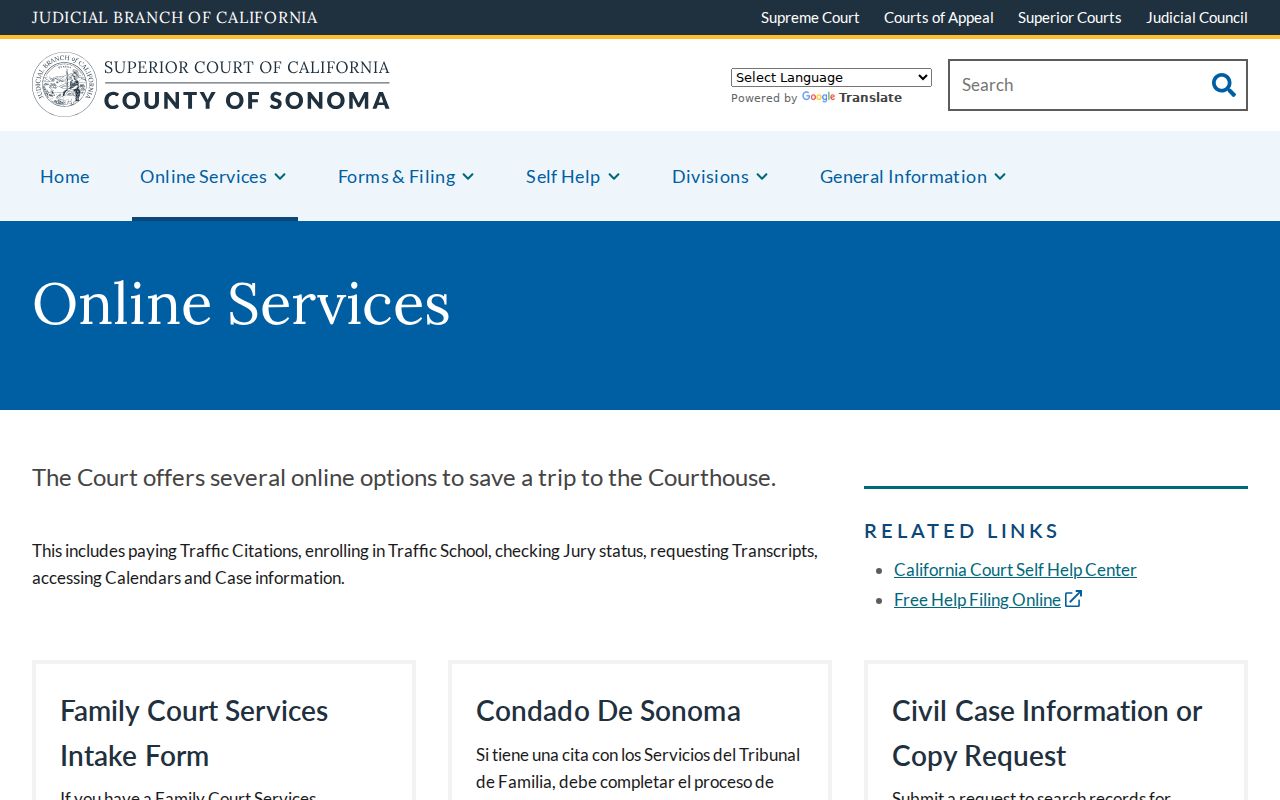
Sonoma Superior Court’s online-services page routes a name search by division. Odyssey criminal search supports Case Number, Party Name, Last Name or Business Name, First Name, file-date limits, and case type or location when enabled. A result row may list Case Number, Defendant Name, File Date, and Case Status. Opening a result can reveal Case, Party, Charge, Disposition, and Hearings tabs.
These fields are useful for narrowing a common Windsor name, but they do not make the result a full file. Remote views may omit documents and confidential identifiers. A disposition is an outcome field, while a charge is an allegation. The search note should save the case number and exact name, then move to the Records Department when the question depends on the filed document.
The Sonoma Superior Court online-services page is the division-by-division starting point.
Get the Windsor Resident Court File
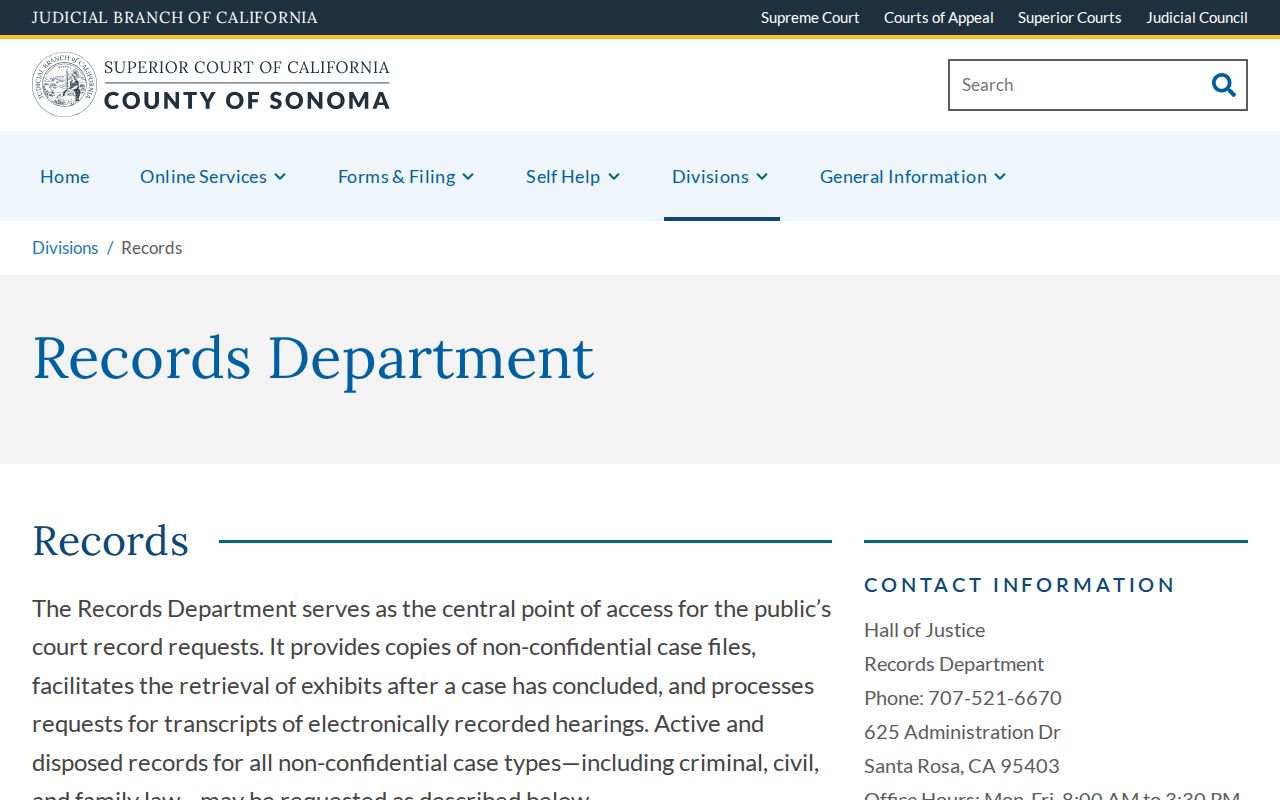
For civil, family, probate, and older criminal material, a web result may be only the first clue. Sonoma’s Records Department at 625 Administration Drive in Santa Rosa accepts mail, in-person, and online requests for active or disposed nonconfidential files. A mail request uses the Record Request Form, a self-addressed stamped envelope, and payment. The court suggests a blank check marked “Not to exceed” when the final page count is unknown.
Research notes list $0.50 per page, $40 for certification of a filed document, $15 for a dissolution-judgment certification, $15 for a search longer than ten minutes, and $5 for storage retrieval. Archives reach civil, family, and probate filings back to the mid-1800s, though cases before 1984 may take longer to retrieve. Provide full party names, approximate final year, case number, requested documents, and certification need. Remote access can be narrower than a public terminal under California Rules of Court 2.500-2.507.
The Sonoma Superior Court Records Department explains request, archive, fee, and contact routes.
Windsor Resident Lookup Vital Copies
A vital-record clue is not the same as a certified copy. Sonoma County Health covers current and prior-year births and deaths. The Recorder holds all years recorded in Sonoma County. CDPH supplies statewide copies. Public marriage copies follow the recorder or CDPH. Confidential marriage copies are limited to authorized parties or a court order. A Sonoma Superior Court decree is the source for a divorce judgment, while a CDPH dissolution certificate is a limited certificate.
California’s authorized-copy rules rely on the relationship or legal basis under Health and Safety Code §§103526 and 103526.5. An informational copy can be available without the same relationship proof, but it carries a restrictive legend. The CDPH 2026 fees are $31 birth, $26 death, $19 marriage, and $18 dissolution. A mailed authorized request can require a notarized sworn statement. When no record is found, the search fee is retained. Use the exact form and custodian instructions for the event.
Windsor Lookup for Heirs and Classmates
A person-centered Windsor resident lookup changes with the use case. For an heir, start with an obituary or death index, then a probate party search, petition, order, and certified vital record if legal proof is needed. For a former classmate, use Windsor school yearbooks at History & Genealogy, then directories and newspapers. For a business owner, compare SOS entity filings, Sonoma fictitious-business-name records, and a Town license file.
For a birth-parent question, California’s official adoption and court procedures are the lawful route. Adoption and original birth records are sealed, so a public name search is not a workaround. For a historical person, the Local History Index, digitized directory OCR and images, HeritageHub, census, Great Registers, tax, vital, probate, and naturalization indexes can build a dated trail. Keep “possible match” and “confirmed record” separate in notes.
Windsor Resident Lookup in Federal Cases
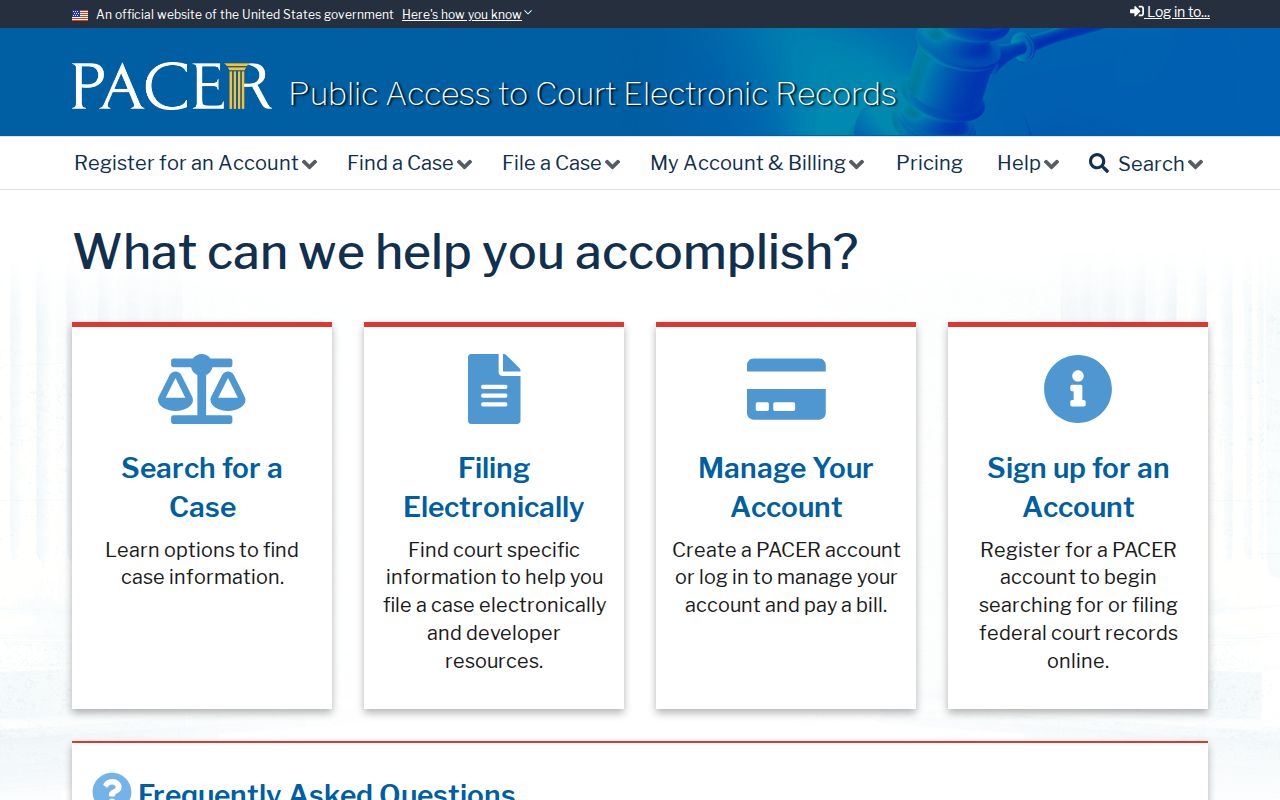
Some Windsor-related cases fall in the U.S. District Court for the Northern District of California rather than Sonoma Superior Court. PACER searches federal party and case indexes and supplies federal documents through an account. The research inventory lists $0.10 per page, capped at $3 per document for most documents, with quarterly charges of $30 or less waived. Courthouse terminals may allow free viewing, with printing charged.
PACER is a separate trail. A federal result should be kept distinct from a Sonoma state case, and a party name still needs disambiguation. Bankruptcy records use the Northern District bankruptcy court. A federal case number, court, party role, and filing date are better anchors than a name alone.
The PACER service is the federal court route for a Windsor-related case.
Verify a Windsor Resident Record
The same-name trap is common in Sonoma indexes. Use middle names or initials, a spouse or relative, a date, address, APN, occupation, license number, case number, or county. Preserve diacritics and maiden names. Search alternate spellings and partial terms, but label a result as a possible match until an independent source agrees. A record that fits only the name is not enough.
- Anchor the name to a known address, parcel, relative, date, or public affiliation.
- Run the Sonoma court party search with the strongest name form and any available case or date clue.
- Compare the result with a deed, assessor clue, directory, newspaper, vital index, or license record.
- Order a certified copy from the custodian only when the legal or family question requires official proof.
- Docket
- The court’s running case record, which can list events and status without reproducing every filed document.
- Index versus image
- An index is a finding aid. The image or file is the fuller source and may require a purchase, request, or counter visit.
- Certified copy
- A custodian-issued copy attested as matching the official record; access and eligibility depend on record type.
- Disposition
- The recorded outcome or status of a case event; an allegation should not be described as a final outcome.
A verification note should state the source, search date, exact name form, matching clue, and unresolved conflict. That record makes it clear whether the result supports identity, a relationship, a dated listing, or only a possible match.
Windsor Resident Lookup Court Guidance
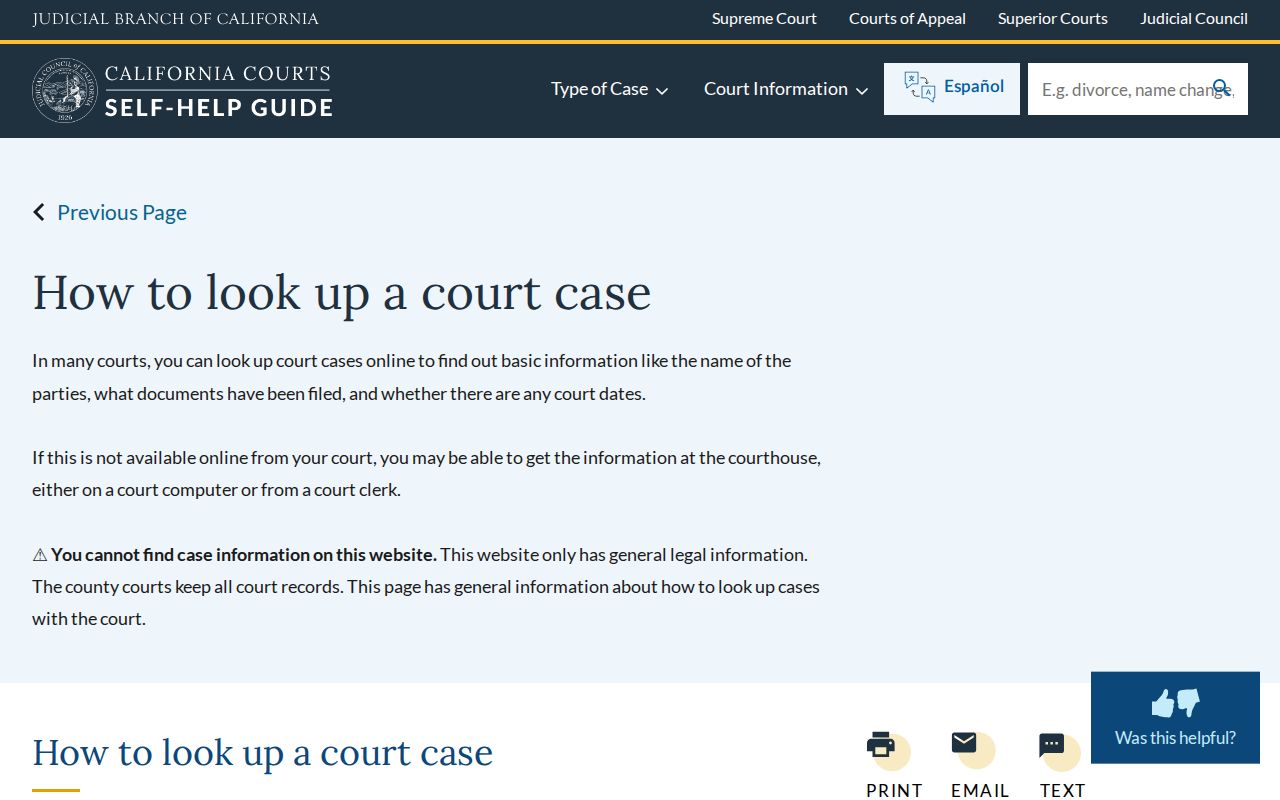
California’s self-help court guidance makes the custody split plain: trial-court files remain with the county court, and there is no single statewide trial-court party index. Search Sonoma Superior Court for a Windsor matter. Use the state guidance to understand what a public case lookup can show, then ask the county Records Department for the file or copy route.
The result can be limited by case type, remote access, confidentiality, archive location, and copy rules. Supply the exact case number when possible. If a name is common, add a date range and party role. If a file is sealed or confidential, stop at that boundary. A resident lookup is stronger when its notes state which custodian supplied each fact.
The California court case lookup guide explains the county-held trial-record structure.
Legal Limits on a Windsor Resident Lookup
California’s privacy boundaries are part of the search method. The DPPA protects DMV data. Elections Code §2194 limits voter records to approved purposes and withholds license, Social Security, signature, and specified confidential fields. Safe at Home can shield eligible participants with a substitute mailing address and confidential voter registration. Adoption and original birth records are sealed absent a statutory or court route. Sealed, expunged, juvenile, and confidential court material is not ordinary public search content.
If an official record is wrong, contact its keeper: the Assessor for a roll field, the Registrar for voter procedure, the clerk for a court docket, or a licensing board for a license. A commercial compilation cannot correct the source. A narrow request under the California Public Records Act can reach an existing Town record, but it cannot erase a lawful privacy limit. Use the least personal data needed and stop when the source says the record is protected.
Lawful personal use. A Windsor resident lookup can support family history, a legitimate records question, or safe reconnection. Do not use a result to stalk, harass, threaten, or intimidate anyone. California Penal Code §646.9 and §422 set serious limits.